O1

My Take: We are not Newcomers

Let us not just celebrate Arab American heritage—let us be changed by it

Marhaba (mar-huh-bah or mar-ha-bah). A simple word, ancient and powerful. Rooted in Aramaic and Syriac languages of early Middle Eastern Christians. It means more than just “hello.” It means God is love. It’s a greeting, a theology, a word grounded in relationship, faith and belonging.

April is known as Arab American Heritage Month, but the church is invited to not only observe one month out of the year but to reclaim marhaba as a spiritual practice of welcome, belonging, dignity and solidarity.

At the heart of our culture is hospitality. The moment a guest walks into our home or church, we no longer see them as a stranger—they are part of our family. We don’t just offer food, we offer belonging. You’re not just a visitor, you’re embraced with dignity and love. That spirit of open doors and open hearts mirrors the gospel: there are no outsiders in the body of Christ. The church is called to do likewise—not only to welcome the stranger but to receive them as part of the body of Christ.

But for too long, Arab Americans have been painted as the “other.” Our stories flattened and identities misrepresented. Whether Muslim, Christian, Druze or otherwise, in Hollywood and other places, including the church, we’re cast as villains, terrorists, foreigners or footnotes. These images have real consequences—from hate crimes and surveillance to erasure and isolation. Even indigenous Arab Christians who are descendants of the earliest followers of Christ are often invisible in American Christian spaces.

That’s why this month matters.

It’s why we give thanks to the ELCA, specifically the Ministries of Diverse Cultures and Communities (MDCC), for opening its doors to Arab American communities. For making space not only for our language, culture and style of worship but for our leadership, theology, story and witness. Through the MDCC’s support, Arab Lutheran congregations are taking root in places where the gospel is preached in Arabic, where Dabke is danced in celebration and where marhaba is lived out loud. These congregations aren’t side projects—they are essential to the church.

Arab Americans have helped build this country. We are doctors, engineers, teachers, artists, small-business owners, veterans and public servants. We’ve enriched American cuisine, contributed to scientific breakthroughs, helped shape national policy and led movements for justice. Arab Americans have woven their lives into every part of this nation’s fabric.

We are not newcomers—we are neighbors.

Let us remember: marhaba is not just about welcome. It’s about belonging.

Representation shapes how we see God and how we see each other. To support Arab American ministries is to proclaim that Christ speaks every language, eats every dish and walks with every people. It’s to remember that Christianity was never Western to begin with, and we did not convert from Judaism or Islam. Jesus was born in my hometown, Bethlehem; grew up in Nazareth; and was crucified in Jerusalem. And Christianity first spread across lands now called Syria, Palestine, Lebanon and Egypt.

Marhaba is more than a greeting. It’s an invitation to reimagine the church as a place where no one is foreign. It’s a call to resist tokenism and performative inclusion and instead build real relationships rooted in listening, trust and shared struggle.

So this month, let us not just celebrate Arab American heritage—let us be changed by it.

Let us teach and preach about the early church as a living legacy still carried in Arab American communities. Let us teach our congregations that when Jesus said to love your neighbor and the stranger, he was talking to a people who knew what it meant to flee, to be displaced, to be labeled othered. Let us break down the walls that separate us from our neighbor and dismantle racism, support Arab-led ministries and show up in solidarity when our siblings are targeted or dismissed.

Let us remember: marhaba is not just about welcome. It’s about belonging.

To my beloved ELCA, we thank you for making room at the table for us. For helping Arab American congregations not just survive but thrive. For reminding the whole church that inclusion reflects the kingdom of God.
In Christ,
Rev. Khader Khalilia

IMG_4475

What Do Our Youth Really Need? Grace That Makes Space

Greetings from Pastor Khader:

In Bethlehem, Palestine, where I grew up, my entire high school class would gather at the Arab Orthodox Club to watch soccer matches. Nearly every day after school, my friends and I spent hours volunteering for the local Lutheran scouts. Our social occasions and even our economy were defined by the holidays we celebrated. In other words, church was a central—perhaps the central—structure of our teenage lives.

Seeing that this is not the case for the youth around Grace Lutheran Church, I’ll admit feeling frustrated and sometimes confused. But I’ve also realized that we are far from the only church that struggles with youth ministry—it’s actually a formally noted fact today that all across the country, teens fall away from church after confirmation and on average don’t return until their mid-thirties (often when they have their own kids). Yet, while this has led many to call today’s teens a “lost” or “misguided” generation, I simply cannot accept this analysis.

Why not? Because after getting to know many amazing youth at Grace these past few years, I’ve realized that, rather than complain and condemn, we as church leaders need simply to invite our youth to be part of the conversation.

We need only to ask: Why? We need to ask: Why should teens want to stay involved in their church communities? And: What significant and unique purpose can we—churches and spiritual leaders—serve in the lives of our youth?

While I haven’t directly asked the youth these questions (yet), I’ve realized by listening to them that the spiritual needs of youth in New York are in many ways quite different from the needs of my former classmates in Bethlehem. In Bethlehem, we needed things to speed up the monotony of our lives. There, church gave us necessary structure and provided us positive authority by simply organizing fun activities like bowling, marching, and music. Here in New York, kids have the opposite problem—constantly rushing from AP classes to band practices to soccer games to school clubs to SAT tutoring sessions. They do not need more structure, nor do they need more activity. It seems to me (and youth should correct me if I’m wrong!) that what our youth need most is a space and a time to slow their lives down—a time for spiritual reflection and a place where they can explore their identities and value systems without distraction—time and space to integrate all the diverse components of their busy lives into a coherent whole of their own making.

So how can we create this space?

We are open to ideas—always. Last year, Lauren and the Confirmation youth did an amazing job leading Sunday school for the first communion kids. Kirsten started a youth choir from all those who attended. In September, my hope is that we can continue this choir and continue the wonderful Sunday school classes that were developed last year. Many ideas have been raised already, and my hope is that this approach will bring renewed vitality to our youth program at Grace Lutheran Church.

In Christ,
Rev. Khader Khalilia
V1

Still Reforming: A Church Called to Grow in Grace

Greetings from Pastor Khader:

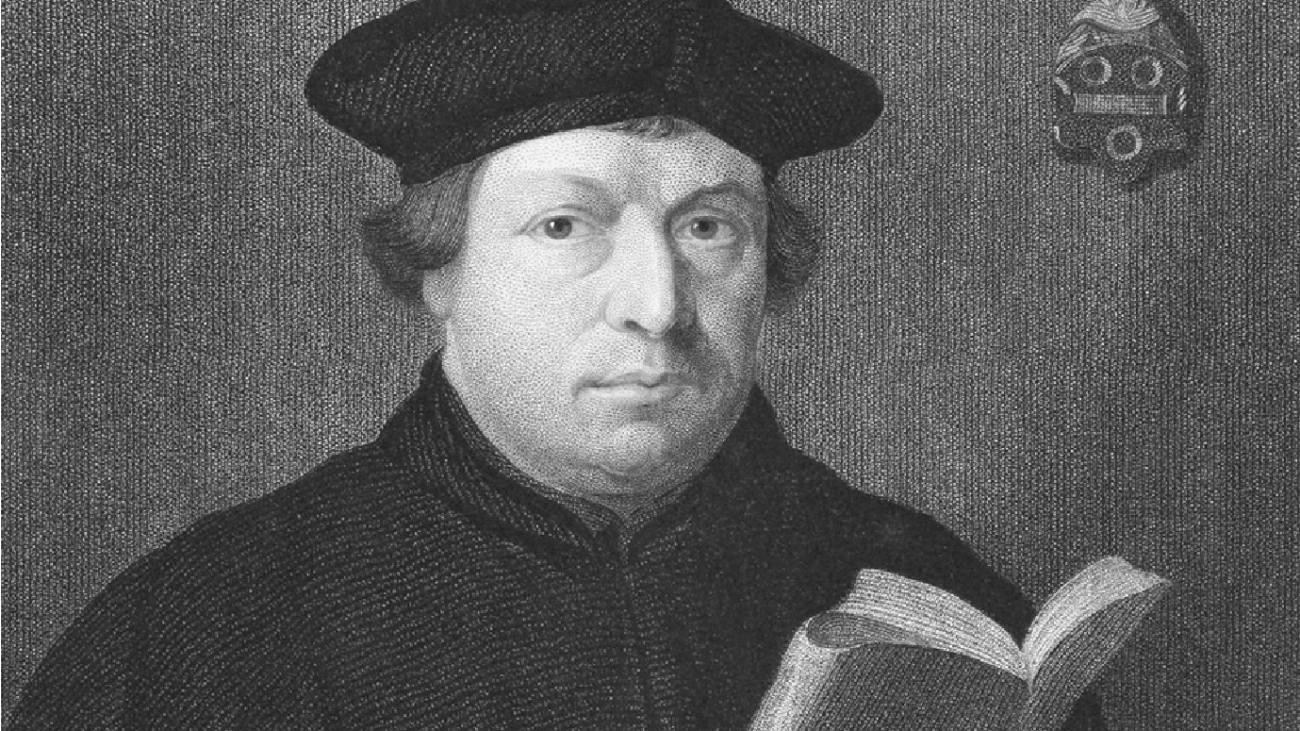
On Sunday, October 29th, Lutheran congregations across the globe will gather to commemorate the 500th anniversary of the Reformation. Our own congregation, Grace Lutheran Church, will commemorate this heritage as rebels and reformers—to honor our faith roots in a movement sparked by a man named Martin Luther, who loved his faith too much to see it perverted by the corrosive influence of human ego.

Our Reformation history honors even deeper roots… roots in a movement that empowered every person to take the search for truth into his or her own hands and to take comfort in the knowledge that each of us can be in relationship with God… without membership fees… without having to go through a middleman… without separation… without distinction.

Reformation calls us to remember how the freedom of the Spirit was reclaimed then… in the days of Martin Luther and his 95 Theses and his big box of nails… But focusing on Martin Luther’s nailing protest of old… this is good, but it’s not really enough.

Luther famously compared his time period in Rome to Babylon in the time of the Hebrew Scriptures… Babylon where the Israelites had been dragged off into bondage… Today, as our loved ones, our friends, our neighbors, distant others, or we ourselves remain unemployed, underprivileged, or unrecognized… can we really doubt that today we are still in bondage? And if we are in fact in bondage, then what does that say about our truth?

One of Luther’s great insights into the nature of Christian faith and life… and into the life and future of the church… was this:

Sometimes we feel that we are close to God and we believe we understand God’s truth. And then at other times, we feel the opposite… that God is either immeasurably far away… and at still other times, God seems to be somewhere in between, or just beyond our reach.

Life as a Christian is recognizing that God is both near and distant… In Christ, we come to know God in the deepest understanding of what it means to have knowledge or to know… but at the same time, God is hidden.

And this is the life of the church… lived out in this tension between being already saved, claimed as God’s own… and still falling short of the fullness of what God intends for us. The life of the church is lived out in being Lutheran and therefore the children of the Reformation, and in realizing that at the exact same time we too must be reformers.

Reformation is not just history. Reformation is every day. Where in our baptism we die with Christ, and then we live again, so too reformation is a process of continuation… Reformation is continuing in pursuit of Christ’s freeing promise of continual transformation.

The late theologian and food writer Robert Capon said this about the Reformation:

The Reformation was a time when men went blind staggering drunk because they had discovered, in the dusty basement of late medievalism, a whole cellar full of fifteen-hundred-year-old, two-hundred-proof Grace… one sip of which would convince anyone that God saves us single-handedly. And after all those centuries of trying to lift yourself into heaven by worrying about the perfection of your bootstraps—the Gospel suddenly turned out to be a flat announcement that the saved were home before they even started the journey.

In Christ,
Rev. Khader Khalilia

U1

A Dentist, a Question, and a Deeper Faith

Greetings from our Pastor:

Recently, I had a visit to my dentist for my annual cleaning. This dentist is a friend of mine. We used to do karate together.

My dentist is funny—she loves to talk, ask questions, and answer them. This is what most dentists do when you are sitting in the dentist’s chair, opening your mouth and unable to talk or express yourself. I call this freedom of speech.

Once, my dentist asked me this theological question: “What is redemption?”

She asked it while she was cleaning my teeth. But as I thought about her question throughout the week, I was surprised to find redemption everywhere:

• Going through my mailbox, I was commanded, “Redeem this coupon today for the Disney Adventure of a lifetime!”
Then, I passed a car dealership advertising “Tire redemption!”
• And then there was this article headline: “Alabama Throttles Duke: But No True Redemption!”

These experiences left me wondering how we might redeem the meaning of redemption in our lives. So, what is redemption?

The verb redeem has a strangely diverse range of meanings, including rescue, deliver, save, recover, and atone. To make sense of this, let’s first look in the book of Exodus:


• Redemption meant rescue when God promised the Israelites freedom from the bonds of slavery.
• Redemption meant deliverance as the Israelites fled across the Red Sea, and God parted its waters to allow them safe passage.
• Redemption meant recovery as God claimed those who had suffered powerlessness as “his people,” and as the humiliation of enslavement was soothed by God’s compassion.
• And redemption also meant atonement. As a central part of the Exodus story, the ten plagues brought down upon the Egyptians are celebrated in the Passover Seder.

The cup of redemption reminds us that redemption also involves responsibility and atonement. During the Exodus narrative, each person removes ten drops from their own third cup of wine as the ten plagues are read aloud. Each drop symbolizes the wine-red blood of the innocents who too often bear the cost of struggles for the redemption of peoples and nations. As the wine runs into our meal later, we are reminded that redemption is not clean and neat. And as we drink less than a full cup of wine, we are reminded that, in many ways, redemption remains incomplete.

This message of the complexity of redemption rings especially true to us Christians as we prepare to commemorate the Feast of Holy Cross Day on September 15 during our worship service.

The Last Supper began as a traditional Seder, yet when Jesus raised the cup of wine, he gave new meaning to the covenant of redemption.

This cup is the one to which Jesus was referring when the sons of Zebedee asked to sit in glory at His right and left, and he responded:

Quote Box
You don’t know what you are asking. Are you able to drink the cup I drink or be baptized with the baptism I experience?


It was this cup that Jesus pleaded for His Father to take from Him during His agony in the garden, saying:

Quote Box
My Father, let this cup pass from me!


And it was as he lifted this third cup that Jesus said the words that now begin our celebration of the Eucharist each week:

This cup is the new covenant in my blood; do this, drink this, in remembrance of me.

The suffering of the Egyptians brought about Jesus’ ancestors’ redemption. And Jesus’ own suffering, and his blood, brought redemption for all of humanity.

With this bittersweet cup, let us recall both suffering and salvation as we enter a new covenant in God’s Son, Jesus Christ, who is our Redeemer and our salvation.

In Christ,
Rev. Khader Khalilia
R1

Dust, Cross, and the Hope of Spring

Greetings from Pastor Khader:

Dear friends in Christ,

March has arrived, and with it comes that quiet shift—the days stretch a little longer, the light lingers a little more. But this isn’t spring. Not yet. This is Lent.

The word “Lent” means “lengthening,” and it marks a season not just of changing daylight, but of inner change too. A time to pause, look inward, and clear space for something new.

Each of Lent’s forty days is a call to reflect, to pray, to repent—not in a heavy-handed or guilt-ridden way, but as a way of making room. Like sweeping out a dusty room to let fresh air in. We do this hard work now so that by Easter, we’re ready to rise with it—renewed, lighter, transformed.

Why forty days? Because the Bible is full of meaningful forties:

• Forty days and nights of rain when the earth was flooded in Noah’s time.
• Forty days Moses spent on Mount Sinai, receiving the Ten Commandments.
• Forty days Jesus fasted in the wilderness, facing down temptation before stepping into his ministry.

Lent echoes those sacred stories. It’s about preparation. Stripping away distractions. Facing what needs to be faced, so something greater can begin.

We started this season with ashes. A cross drawn on our foreheads—a symbol that ties death and life together. Ashes remind us that we come from dust, and to dust we’ll return. But they’re shaped in the form of the cross, a sign not of despair but of the promise that even death isn’t the end of the story.

Ashes have always symbolized repentance—our sorrow over what we’ve done or left undone. But repentance isn’t just about guilt. Guilt paralyzes. Repentance moves. It’s taking responsibility, not just feeling bad. It’s the belief that something new can grow, even from ruin.

Repentance moves. It’s taking responsibility, not just feeling bad. It’s the belief that something new can grow, even from ruins

The poet Mahmoud Darwish wrote of this in his poem Death of the Phoenix. The phoenix—a bird that burns, then rises—becomes a metaphor for rebirth from ashes. His lines feel especially true in this season:

In the hymns that we sing
there’s a flute, In the flute
that shelters us, fire
In the fire that we feed,
a Green Phoenix…
In the elegy,
I couldn’t tell
my ashes from
your dust.

We’re in the middle of Lent now. Somewhere between the ashes and the resurrection. But let’s keep going. Let’s carry the ashes not as shame, but as a seed—something that just might bloom again.

May Christ walk with us in this season, and bring us to Easter not as the same people, but as people who’ve grown, grieved, and come alive again.

In Christ,
Rev. Khader Khalilia
S1

One Church, One Spirit: Praying for Christian Unity

Greetings from Pastor Khader:

Week of Prayer for Christian Unity

Dear beloved in Christ,

“Out of the depths I cry to you, O Lord. Lord, hear my voice.” These words from Psalm 130 carry the ache of the human soul. They’re not whispered—they’re cried. And in them, we hear the voice of a Church longing not only for God’s mercy, but for healing among its members.

From January 18 to 25, we join Christians around the world in the Week of Prayer for Christian Unity. We set aside this time each year to remember Jesus’ own prayer for his followers:

That they may all be one… so that the world may believe.”(John 17:21)

That prayer still echoes. It echoes in divided hearts, in fractured churches, in weary communities that long to be whole. It’s not just a dream—it’s a calling. And it’s not unity for unity’s sake. It’s unity rooted in Christ. Unity that comes through reconciliation, humility, and love.

Last year, we stood shoulder to shoulder with Catholics, Orthodox, Anglicans, Episcopalians, and other Christian siblings in Christ to mark 500 years since the Reformation—not as a celebration of division, but as a renewed commitment to healing. I remember the Synod’s service at the Cathedral of St. John the Divine—how leaders from across denominations gathered at the baptismal font, and how the congregation was sprinkled with water in remembrance of the waters that bind us together.
One baptism. One body. One hope. One Lord.

It was more than symbolic. It was sacramental. Because baptism is not just personal—it’s communal. We are not baptized into silos, but into Christ, and into each other.

As Lutherans, we hold fast to the power of grace, the centrality of the Word, and the life-giving gifts of the sacraments. These are not barriers to unity—they’re bridges. When we walk those bridges toward one another, we begin to see that our unity doesn’t erase our differences—but it does demand we carry them with love.

The Apostle Paul writes in Ephesians:

Quote Box
I beg you to lead a life worthy of the calling you have received— with all humility and gentleness, with patience, bearing with one another in love, making every effort to maintain the unity of the Spirit in the bond of peace.” (Ephesians 4:1–3)

Friends, unity is not uniformity. It’s not agreement on every doctrine or tradition. Unity is the Spirit’s work among us, when we show up with patience, speak truth in love, and trust that the Church belongs to Christ—not to us.

So let’s keep praying for unity—not just with our lips, but with our lives. Let’s keep showing up to the table, listening with grace, and remembering the water that washed over us all—the same water, the same promise, the same Christ.

May this week of prayer remind us of who we are: One Church. One Body. One Spirit. In Christ, for the sake of the world.

In Christ,
Rev. Khader Khalilia

T1

Lent as Liberation: Jesus’ Way Through the Desert

Greetings from Pastor Khader:

Dear Siblings in Christ,

Just imagine living in a room the size of a jail cell, on top of a mountain, in the middle of the desert, in the attic of a tiny house. Imagine you’re always hungry, because in order to get food, you have to lower a bucket to the people down below you. They fill it with simple foods—maybe bread and water. You have no comforts, and little light. You live in this room by yourself; your only human contact is with the voices that drift up to you from the rooms below.

You probably think I’m describing a jail. To most of us here in New York, this sounds terrible. In this country, Christianity goes hand in hand with freedom and abundance.

But I have seen Christians who live in this way by choice. In fact, the monk I just described lives on a mountain in Jericho, Palestine—the very place where Jesus was tempted by the devil. The monks who live there today are part of the monastic movement, which actually began on that very mountaintop in my home country many centuries ago.

Maybe you expected me in this article to write about our recent trip to the Holy Land and Jordan; however, I’ve decided to postpone this to a time during coffee hour. We are waiting for the travel agency to send us the pictures and video and will keep you posted about the exact date. This article is going to be about the monastic movement.

The monastic movement started when early Christians began a tradition of moving to the desert to follow the same path toward God that Jesus followed when he fasted for forty days in the wilderness and felt the Holy Spirit.

The monastic movement looks at Jesus’ life as an example, instead of as something divine that they will never touch. They see Jesus’ life as a model of how they can make the most of every moment of their existence by challenging and proving to themselves and to God that they are really committed to God and are working to be close to God. They use fasting and other kinds of physical, mental, and psychological challenges to strengthen and weaken their spirits at the same time, and they commit to being completely devoted to prayer, Bible study, and this type of “spiritual discipline.”

In addition to Jesus, they also look at Old Testament prophets such as Samuel, Elisha, Nathan, and John the Baptist as people who would inspire them to follow the Holy Spirit and throw away their attachment to physical objects, popular culture, and all of the other things in their lives that they consider to be either sinful or just distracting from the true life close to God.

If we look back in the Bible, we see a desert where Moses hears the voice of God calling out from a burning bush, and where he then leads his people out of slavery, through forty years of exile. We see a desert cave that hides and comforts Elijah, and where he too hears God’s voice giving him purpose and direction. In the desert, the prophet Hosea tells us, God will reignite our loyalty to faith. In other words, the biblical desert is a place where prophets come to hear the voice of God.

So Lent is about the quiet voice of God that comes to us in these moments of need. When we make room in our spirits, the Holy Spirit enters. When we trust this Spirit, it leads us into emptiness. And from the emptiness, holiness is reborn.

For Jesus, the long period of starvation in the wilderness emptied his body, and this left his spirit open to receive God’s purpose. Jesus took the Devil’s temptations and turned them on their head. He used them to free himself.

Jesus emerged from the wilderness freed of hunger for food or control, because he had learned that neither bread nor power would truly satisfy him. Jesus learned to trust the Holy Spirit within him, but he also freed himself from the illusion that he could just sit and wait for God to make his choices for him. Jesus realized his own power.

And so Jesus passed his “desert exam,” not only because he disobeyed the Devil’s loud voice, but because he silenced his own desires long enough to hear God calling to him through the empty desert wind. In other words, this story is not only about temptation, but also about the value of the desert wilderness.

Lent is a time of spiritual growth—a time for us to challenge ourselves to smash our idols and material addictions. We are challenged to meet the Devil’s temptations face to face, but to listen through them for the voice of God. During the forty days of Lent, we prepare ourselves to go to Jerusalem and to walk the Via Dolorosa. I pray that your Lenten season will be not a prison or a punishment, but will instead be a celebration of the desert’s opportunities.

In Christ,
Rev. Khader Khalilia
Q1

The Cloud That Holds Us: God, Saints, and the Church

Greetings from Our Pastor:

Last October, I went to Chicago to attend the annual meeting of ALAMEH — the Association for Lutherans of Arab and Middle Eastern Heritage. The meeting was held at the ELCA headquarters, and I had a chance to talk with ELCA Presiding Bishop Rev. Elizabeth Eaton.

In the evening, I had some time off and visited a good friend who lives nearby. He took me out for Greek food — one of my favorites. Over dinner, our\ conversation jumped around, and somehow, we ended up talking about the “iCloud.” He’s an engineer, so that wasn’t too surprising.

If you’re not familiar with it, the iCloud is a way to store your stuff — pictures, music, documents — somewhere other than your phone or computer. It all stays “in the cloud,” and you can access it from anywhere, anytime. Pretty convenient, even if the name makes it sound a bit mysterious. Behind the scenes, it’s just a giant storage system that connects to you whenever you need it.

Funny enough, the Bible talks about a cloud too — but this one’s not digital. In the Book of Revelation, the cloud holds the voice of God. It’s also the cloud Christ will return on. It’s not just a symbol — it’s a presence. A promise. And just like the iCloud connects us to what we need, this cloud reminds us that God is never out of reach.

Revelation also speaks of another kind of cloud — a “great cloud of witnesses.” These are the saints, the ones in white robes who’ve been made clean through the blood of the Lamb. In other words, those who’ve been saved by faith. Not because they were perfect, but because God is gracious.

That brings us to All Saints Day at the start of November. It’s a day we remember all those who’ve gone before us in faith — people whose lives reflected God’s grace, even in quiet, everyday ways. Their faith is a gift from God, something the Holy Spirit works in us. And we experience that grace not just in words, but in water, bread, and wine — in baptism and Holy Communion.

On All Saints Sunday, November 1st, we’ll bring all these pieces together. We’ll hear God’s promises spoken again. We’ll share in the Lord’s Supper — that foretaste of the feast to come. We’ll sing “When the Saints Go Marching In” — not just because it’s a great song, but because we want to be part of that
number. Part of that cloud.

We’ll also take time to remember the saints in our own lives. Friends, family, loved ones who have passed on — the ones who helped shape our faith, even if they didn’t always know it. I invite you to bring a photo of someone you want to remember, and we’ll display them in the sanctuary that day.

Let’s make this a time to remember, to give thanks, and to celebrate the lives of those who’ve gone ahead — and the God who holds us all together, here and now, and forever.

In Christ,
Rev. Khader Khalilia
IMG_3522

Walking Toward the Light: Reflections on the Holy Fire

Greetings from Pastor Khader:

As many of you know, I grew up in the Greek Orthodox tradition, and while my theology has shifted, I still feel a deep connection to the ceremony of the Holy Fire.

Walking through the aisles of Walgreens, I imagine the fluorescent lights transformed into the intense glow of an ancient church, and all of the chocolate rabbits, pastel-colored toys, and marshmallow chicks also transformed—into a crowd of churchgoers from all over the world—and I am one of them. I imagine the aisles of Walgreens are the walls of the Old City—I imagine Easter in Jerusalem.

Easter in Jerusalem has a… different taste. This city that silently watched Christ’s crucifixion and death also witnessed His resurrection, and gave birth to a renewed light that has since spread throughout the world.

To me, the Holy Fire represents this: a light that emerges from the depths of a death-filled tomb to shine in the face of darkness and oppression. It is carried throughout the world in the hands of human beings, and passed from person to person, from country to country, church to church, over borders, barriers, oceans, and time.

When I was a child, my parents would wake us up at the crack of dawn on the Saturday before Easter Sunday to begin our trip to the Church of the Holy Sepulcher.

On our way out of the house, passing by the kitchen, I would be tempted by the festive smells of ma’mool cakes and hard-boiled eggs, but my mom would pull me along, reminding me that we had to hurry if we wanted to get into the church.

But no matter how early we arrived, we never beat the crowds. Thousands from all over the world descended on the church that morning, and many had even camped there for days outside of the church door.

Pale men wear tall, dark, fur hats; Eastern European women wear colorful scarves; longer pieces of cloth flow out from African and Asian pilgrims as they walk, and the air is filled with chanting and prayer. From far off, you can hear a procession approaching: clergy in black and red robes with scepters that they rhythmically slam into the ground. Orthodox clergy wear gold and white robes and tall ornate hats.

When we arrive, it is a struggle to get into the church, but when we finally make it to the door we are greeted by a wave of incense. There is no space for pews or chairs—there is barely room for all of the people who squeeze inside with their backs against pillars, stone statues of the saints, and one another. (As a kid, I only remember seeing people’s feet.) A Greek chant fills the air: “Kyrie Eleison,” or “Lord have mercy.” It builds momentum for hours until there is suddenly a powerful silence, and all wait for the Patriarch to emerge from the tomb of Jesus Christ, carrying the Holy Fire.

While those waiting don’t know what is happening inside the tomb, one Patriarch described the experience later, saying:

The light rises out of the stone {on which Jesus lay} as mist may rise out of a lake—it almost looks as if the stone is covered by a moist cloud, but it is light. This light each year behaves differently. Sometimes it covers just the stone, while other times it gives light to the whole sepulcher, so that people who stand outside the tomb and look into it will see it filled with light… At a certain point the light rises and forms a column… so that I am able to light my candles from it… Hereafter I give the flame to all people present in the Church.

Those of us lucky enough to be present at the church would bring the experience back with us along with the Holy Fire. Sections of the Holy Fire are flown throughout the world each year, to churches in Russia, Europe, Asia, Africa, and the Americas. We traveled a much shorter distance, past the checkpoint, where we would light candles held by the Scouts who would, in turn, carry the flame through the streets to the rest of our community, waiting to celebrate Easter. In this way, a single flame born from the darkness of a tomb of death is able to spread, always growing, to light the whole world. This is the miracle of resurrection.

In Christ,
Rev. Khader Khalilia
Screenshot 2025-08-06 at 5.35.39 PM

An Autumn Reflection: Belonging, Blessing and Beit Jala

Greetings from Pastor Khader:

Dear Sisters & Brothers al in Christ…

As fall begins in New York, the weather reminds me of how the autumn months felt back home in Palestine, and so on my way to church each morning I recall many past October and November months which I spent together with all of the members of my family, participating in each year’s olive harvest. Beginning early in the morning, we would travel to the fields of olive trees that generations of my family have cultivated and loved.

The roots of these trees are, in a way, my own roots. Each day for several weeks, we work first to gather the olives onto large beige tarps, and at the end of each day to clean our harvest, and to return home tired but fulfilled. Each day, the pile of olives on our roof would grow higher and the branches of the trees would grow barer, until finally my brothers and I would take the fruits of all of our labor and love to be pressed into (famous!) Beit Jala olive oil.

Yet like all things sacred, the olive harvest’s meaning is much greater than either the oil or the fruit that it produces. Since the day after the Great Flood, when the dove which Noah let fly free from the Ark returned to him with a live olive branch, olive trees have become a universal symbol of the strength of hope, and of the hope for peace.

And while Thanksgiving time, for most of you, likely elicits many years of memories of the bittersweet joy of family, the olive harvest also reminds me of some of my best childhood memories.

From time to time during the harvest, my grandmother would gather all of her grandchildren around her under an olive tree. First, she would remind us of the importance of the tree above us. Even if the trunk of an olive tree is severed, its roots continue to grow, ensuring us that next year we will have olives again. My grandmother would remind us that the olive tree’s roots are our own roots: our heritage. Like our families, our communities, and our Church, they support us and promise us strength and renewal.

She would remind us that no matter what might happen, under the olive trees we would always be able to experience belonging.

Eventually, my grandmother would move to other stories. Beginning with stories from the Bible, she would then help us to both memorize and internalize the Lord’s Prayer, the Ten Commandments, and the Nicene Creed. In a way, my true first communion was there with my grandmother, under the olive tree.

The olive harvest and Thanksgiving both come only once a year. However, as I completed my twelve years of ministry here at Grace Lutheran Church, I hope that as a Church we can commit to taking time each day to experience and express similar gratitude for God’s blessings.

Grace Lutheran Church is itself an olive tree. We are its fruitful branches. As we collect both sunlight and rain this year, what is important is that we bring these

experiences together, to create the life of this church. In the coming months and years, my hope is to help mobilize all of the members—from the oldest to the youngest, and particularly the families together—to plant and sow new programs and initiatives in order to ensure that the roots of our church will continue to sprout new life for generations to come.

Finally, during both Thanksgiving and the olive harvest, our primary thankfulness is extended upwards, through our tree’s uppermost branches, towards God the Almighty.

As we gather as families this month, let us remain mindful of and thankful for our potential to sprout our roots ever deeper into the ground, and to grow our branches ever higher, by working together as a community of faith to spread the Word of love, welcoming, and belonging.

In Christ,
Rev. Khader Khalilia